
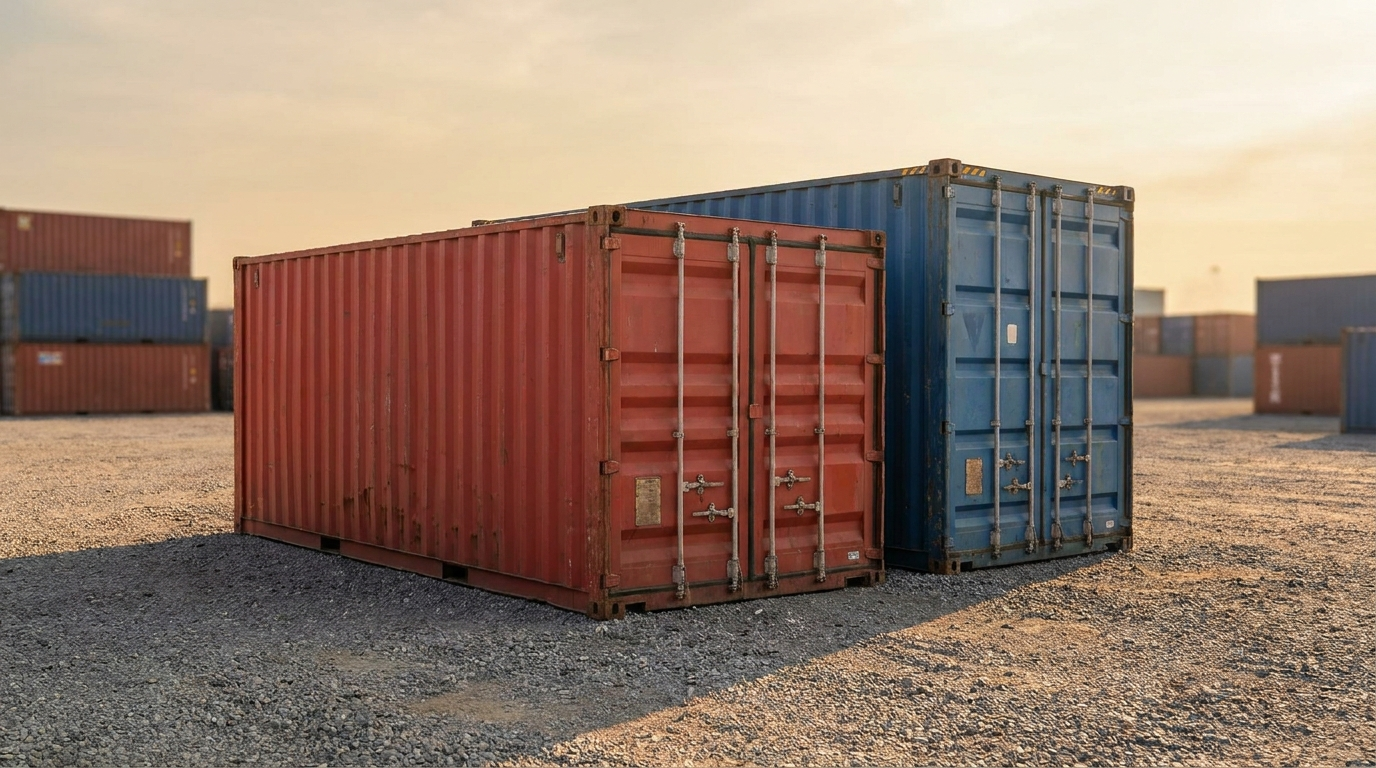
What Is a High Cube Container, and When Does the Extra Foot Pay?
So what is a high cube container, exactly? It's a standard ISO shipping container built one foot taller, 9′6″ external instead of 8′6″, which sounds minor until you're standing inside one. That extra foot is the difference between one shelving tier and two, between insulation that steals headroom and insulation you never notice.
The numbers that change
Interior height goes from roughly 7′10″ to 8′10″. On a 40-footer, capacity jumps from about 2,390 to 2,690 cubic feet, 300 free cubic feet on the same footprint. Everything else, length, width, door width, corner castings, stays standard, so high cubes stack, ship and site exactly like regular boxes.
When the extra foot pays
Shelving and racking: a second full tier fits with working clearance. Conversions: spray foam plus interior finish costs 4-6 inches of ceiling, in a standard box that leaves ~7′4″; in a high cube you keep over 8 feet, which is why container homes and offices overwhelmingly start from high cubes. Tall cargo: machinery and stacked pallets that miss by inches in a standard box.
When to save the money
Pure ground-level storage of ordinary goods doesn't use the height, a standard 20ft or 40ft box stores the same floor area for less. Browse current high cube containers with published prices, or check exact dimensions in our dimensions guide. Free delivery to all 50 states on every unit.




Add comment