
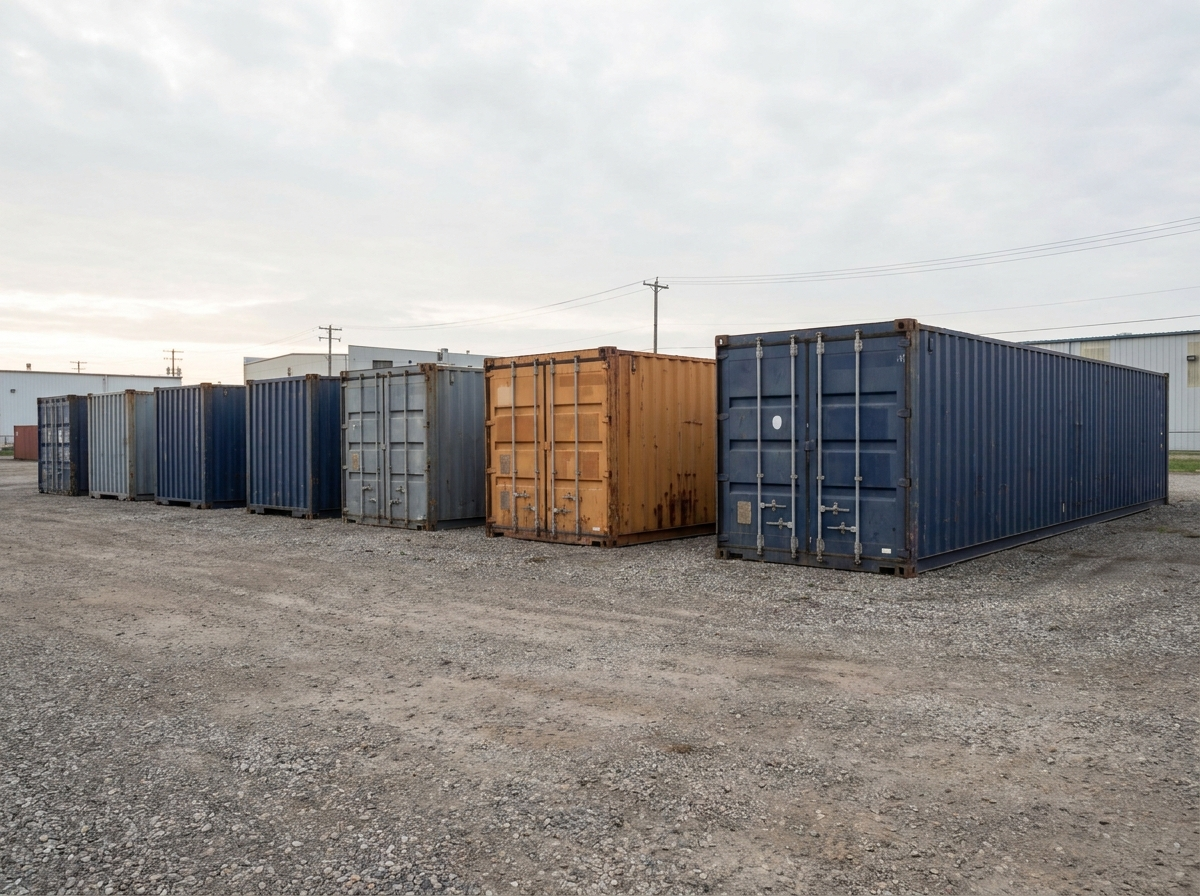
How Much Does a Shipping Container Cost? (2026 Price Guide)
How much does a shipping container cost? As of 2026, most US buyers pay somewhere between roughly $1,300 for a solid used 20 ft box and $6,000 or more for a new 45 ft high cube. Where you land inside that spread comes down to three things: the size, the condition grade, and how far the container has to travel after you buy it. That last one surprises more first-time buyers than anything else, so this guide covers all three, with real market ranges rather than teaser numbers.
One note up front. At AnchorBox we publish the price on every product page, you can check out online, and delivery and placement are included free anywhere in all 50 US states through our regional depot partners. So you can hold the ranges below against our shipping containers catalog at any time and see exactly where a listed unit falls.
How Much Does a Shipping Container Cost by Size?
These are typical US market ranges for standard dry containers as of 2026. Pricing moves with steel costs, import volume, and distance from the nearest depot, so treat these as a sanity check, not a quote.
| Size and condition | Typical 2026 range (US) | Notes |
|---|---|---|
| 10 ft (refurbished or new build) | $2,200 to $4,000 | Often costs more than a used 20 ft because most are cut down or purpose-built |
| 20 ft used (WWT or cargo-worthy) | $1,300 to $2,500 | The workhorse of backyard storage |
| 20 ft new (one-trip) | $2,500 to $3,900 | Best-looking option at this size |
| 40 ft used | $1,600 to $2,900 | Best price per square foot on the market |
| 40 ft high cube used | $1,800 to $3,100 | Extra foot of height, modest premium |
| 40 ft high cube new (one-trip) | $3,600 to $5,600 | The standard choice for conversions |
| 45 ft high cube | $2,400 to $6,500 | Used to one-trip; less common, check depot availability |
Sizes themselves are standardized worldwide under ISO 668, which is why a 20 ft box from any seller has the same footprint. Condition is where sellers differ, so the grades matter.
New (One-Trip) vs Used: What the Grades Mean
One-trip (new)
Built overseas, loaded once with cargo on its first voyage, then sold. Expect near-new paint, tight doors, and clean floors. This is the grade to buy if the container will sit where people see it, or if you plan to convert it into an office or living space.
Cargo-worthy (CW)
A used container inspected and certified as structurally fit for shipping. Doors, seals, floor, and frame all pass. Cosmetics vary: expect dents, surface rust, and mixed paint.
Wind and water tight (WWT)
The most common used grade. It keeps weather out, doors open and close, but it carries no shipping certification. For dry storage on your property, WWT is usually the smart-money buy. Browse our used shipping containers to see what current WWT stock looks like.
As-is
No guarantees. May leak, may have floor damage or door problems. Only worth it if you can inspect in person and you have a plan for repairs. The discount is often smaller than the repair bill.
The High Cube Premium
A high cube is one foot taller than a standard container: 9 ft 6 in exterior instead of 8 ft 6 in. The premium is typically a few hundred dollars, and for shelving, workshops, or any conversion work, that extra interior foot is usually worth it. Most 40 ft units sold today are high cubes anyway; the premium mostly shows up on 20 ft boxes.
The Delivery Cost Most Quotes Leave Out
Here is the part of the math that low advertised prices tend to hide. A container moves on a tilt-bed truck from a depot, and as of 2026 that typically runs from around $150 to $600 or more within about a hundred miles of a depot, climbing fast beyond that. A cheap container three states away can end up costing more than a fairly priced one delivered free.
We handle this differently: delivery and placement are included in our listed price for all 50 US states. Your container ships from the depot partner nearest you, the driver places it where you want it, and there is no freight surprise after checkout.
What Actually Drives Container Prices
- Steel prices, since a container is several tons of corten steel
- Import volume: when more loaded boxes arrive than leave, used supply grows and prices soften
- Distance from a port or depot: inland markets typically pay more
- Condition grade and age
- Height, extra doors, and modifications
- Season, with spring and summer demand usually firmer
When to Buy
Trying to time the container market is rarely worth it. Prices drift with shipping cycles, but the swings are usually smaller than the difference between a well-graded unit and a bad one. The better play is to decide your size, most people are choosing between a 20 ft container and a 40 ft container, pick the right grade for the job, and buy when you find a clearly graded unit at a fair all-in price. If you want a second opinion on a listing, call us at (509) 575-1198 and we will talk it through.
Frequently Asked Questions
Is a 20 ft or 40 ft container the better value?
Per square foot, the 40 ft wins almost every time, since it typically costs only 30 to 60 percent more than a 20 ft while doubling the space. Buy the 20 ft when access or placement space is the constraint, not to save money.
Do advertised container prices include delivery?
Usually not, and freight can add hundreds of dollars depending on distance from the depot. AnchorBox prices include free delivery and placement in all 50 US states, so the listed price is the final price.
How do I pay for a shipping container online?
Our store has real online checkout with visible prices. You can pay by card link or bank wire, and if you would rather order by phone, call (509) 575-1198.



Add comment